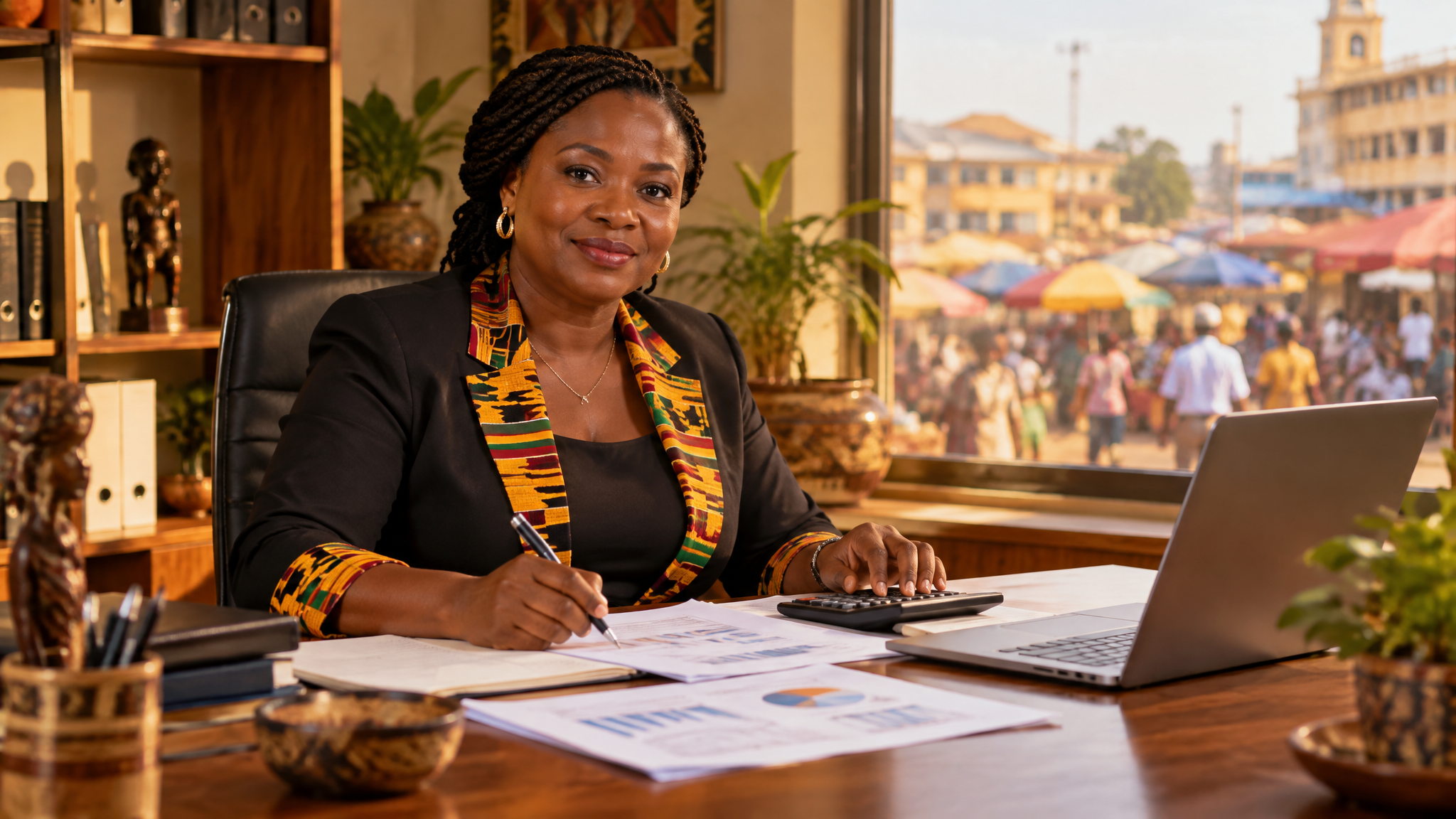
Women & Youth SME Financing in Ghana: Your 2026 Guide to Funding Opportunities

Women and young people are the backbone of Ghana's informal and small business economy, yet they consistently face the steepest barriers when seeking formal financing. Collateral requirements, limited credit history, and unfamiliarity with formal application processes have historically locked many out of bank credit. That picture is changing — slowly but meaningfully — as government agencies, commercial banks, and development finance partners introduce products and programmes specifically designed for women- and youth-owned SMEs.
This guide maps the most practical financing routes available in 2026, explains how each works, and offers concrete steps to improve your chances of success. Whether you run a market stall, a small agribusiness, a tech start-up, or a service business, there is likely a route suited to your stage and sector.
Government programmes: GEA, MASLOC, and YEA
The Ghana Enterprises Agency (GEA) — formerly the National Board for Small Scale Industries — is Ghana's principal public agency for MSME development. Its network of more than 200 Business Advisory Centres (BACs) and Business Resource Centres (BRCs) across the country is often the best first stop for any woman or young entrepreneur seeking support. GEA runs several targeted programmes: the Women MSME Programme and WERise Network offer training, business support, and networking; the BizBox initiative provides entrepreneurship support and start-up kits with a strong emphasis on young women; and the YouStart Ghana Jobs and Skills Project targets youth entrepreneurship training with funding for selected participants. GEA also operates a Market Women Fund portal and grant windows for high-growth SMEs where women-owned firms may receive priority. Because these programmes are cohort-based, monitoring the GEA portal and visiting your nearest BAC or BRC is essential to catch open application windows.
The Microfinance and Small Loans Centre (MASLOC) provides microcredit, small project loans, and equipment hire-purchase to individuals, groups, and associations. Its Women Empowerment Initiative specifically targets women engaged in viable economic activities, offering funding alongside skills acquisition and business-development support. Group loans — available to associations of roughly five to twenty-five members with shared interests and internal governance — are a practical route for market women and cooperative members. MASLOC does not operate a universal online application form; the correct starting point is a regional office or the head office in Accra. The Youth Employment Agency (YEA) complements these routes by offering entrepreneurship and skills training modules to Ghanaians aged fifteen to thirty-five, with selected initiatives providing equipment or start-up capital. YEA is not a standard SME lender, but its training and placement programmes can build the skills and track record that make a young entrepreneur more bankable.
Bank products designed for women and young entrepreneurs
Several commercial banks have moved beyond generic SME lending to create products with women and youth specifically in mind. Ecobank Ghana's Ellevate programme targets qualified women-owned or women-led businesses with a package that combines loans, training, mentorship, digital services, and market-access support. The wider Ellevate programme across the Ecobank network describes collateral-free lending of up to US$50,000 for eligible participants, though specific Ghana terms should be confirmed directly with the bank. Fidelity Bank's Young Entrepreneurs Initiative (FYEI) targets entrepreneurs aged eighteen to forty — including youth-led agribusinesses and female entrepreneurs — with seed capital, soft loans, and business-management training. An agricultural allocation of GHS 5 million was documented at the initiative's launch; confirm current availability and terms with Fidelity Bank directly.
Pan-African Savings and Loans' MAMA Programme offers subsidised credit alongside financial and digital training for grassroots women entrepreneurs, including those in the informal sector. These bank-level products typically require business registration, some form of financial records, and a viable business case, but they are designed to be more accessible than standard commercial credit. If you are unsure which bank product fits your business, a GEA Business Advisory Centre can help you compare options and prepare your application.
Agricultural finance: GIRSAL and FIRST+II guarantees
Women and youth running agribusinesses have access to guarantee mechanisms that can significantly reduce the collateral burden when borrowing from a formal lender. The Ghana Incentive-Based Risk Sharing System for Agricultural Lending (GIRSAL) provides credit risk guarantees covering up to seventy percent of an agricultural loan's principal through partner financial institutions. GIRSAL does not lend directly — you apply to a participating bank or NBFI, and the lender requests the guarantee on your behalf. This makes it easier for women and youth agribusiness owners who lack traditional collateral to access credit for inputs, equipment, or working capital.
The FIRST+II Loan Portfolio Guarantee, supported by development finance partners, targets underserved rural agri-MSMEs — including smallholders, women-led, and youth-led enterprises — through participating rural banks and NBFIs. If your agribusiness is in a rural area and you have been turned down by a commercial bank, asking a rural bank or NBFI whether they participate in FIRST+II-backed facilities is a practical next step. Development Bank Ghana (DBG) also supports longer-term SME finance through participating financial institutions, including collaboration with GIRSAL in selected agricultural value chains.
Common barriers — and how to address them
Understanding why applications fail is as important as knowing where to apply. The most common barriers for women and youth SME owners in Ghana include: lack of formal business registration, absence of financial records, insufficient or non-traditional collateral, limited awareness of available programmes, and vulnerability to fraudulent agents who charge fees to 'secure' government loans. Each of these is addressable with preparation.
Practical steps to strengthen your application:
- Register your business with the Registrar General's Department and obtain a Ghana Revenue Authority Tax Identification Number — most formal financing routes require both.
- Open a dedicated business bank account and use it consistently; even six months of transaction history helps a lender assess your cash flow.
- Keep simple financial records — income, expenses, and stock — even if you use a notebook or a basic mobile app. A GEA Business Advisory Centre can help you set up a basic system.
- Prepare a short business plan that explains what you do, who your customers are, how you make money, and what you will use the financing for.
- Apply only through official channels: government agency websites, official offices, and bank branches. YEA, MASLOC, and GEA do not charge application fees, and no legitimate agent can guarantee approval.
Choosing the right route for your stage
Not every financing route suits every business. A young person at the idea stage should start with YEA training or a GEA BizBox cohort to build skills and a track record before approaching a lender. A market woman with an established business and a group of peers may find MASLOC group credit the fastest route to working capital. A woman-owned agribusiness with some collateral but not enough for a full commercial loan should ask a participating lender about GIRSAL-backed credit. A growth-stage business with clean records and a registered company should explore Ecobank Ellevate, Fidelity FYEI, or a GEA high-growth grant window.
The key is to match your current stage, sector, and documentation level to the right programme — and to verify that the application window is currently open before investing time and money in preparation.
Next steps
The financing landscape for women and youth SMEs in Ghana is broader than many owners realise, but it rewards those who prepare. Start by visiting your nearest GEA Business Advisory Centre or Business Resource Centre for a free business diagnostic and guidance on which programmes are currently active. Register your business, open a dedicated account, and build even a basic financial record. Then monitor official GEA, MASLOC, and YEA portals for open application windows — and approach participating banks directly about products like Ellevate and FYEI.
Financing is rarely a single event. The most successful women and youth entrepreneurs in Ghana treat each loan, grant, or training programme as a stepping stone — using it to build the track record and documentation that opens the next, larger door.
Key takeaways
- Government agencies — GEA, MASLOC, and YEA — offer dedicated programmes for women and youth, but most operate in cohorts with specific application windows, so timing matters.
- Commercial banks such as Ecobank (Ellevate) and Fidelity Bank (Young Entrepreneurs Initiative) have products tailored to women and youth-led businesses, including soft loans and mentorship.
- GIRSAL guarantees and FIRST+II portfolio guarantees can help agribusiness-focused women and youth access credit through partner lenders even without full collateral.
- Preparation is the biggest differentiator: business registration, clean financial records, and a clear business plan significantly improve your chances across all financing routes.
- Always verify programme availability directly with the official provider — application windows open and close, and fraudulent agents sometimes impersonate government schemes.
This article is provided for general information only and does not constitute financial advice. Programmes, rates and regulations referenced may change. Please verify details directly with the relevant institutions or authorities before making decisions.