Green Finance for Ghanaian SMEs: How to Fund Your Clean Energy and Climate-Smart Business Investments
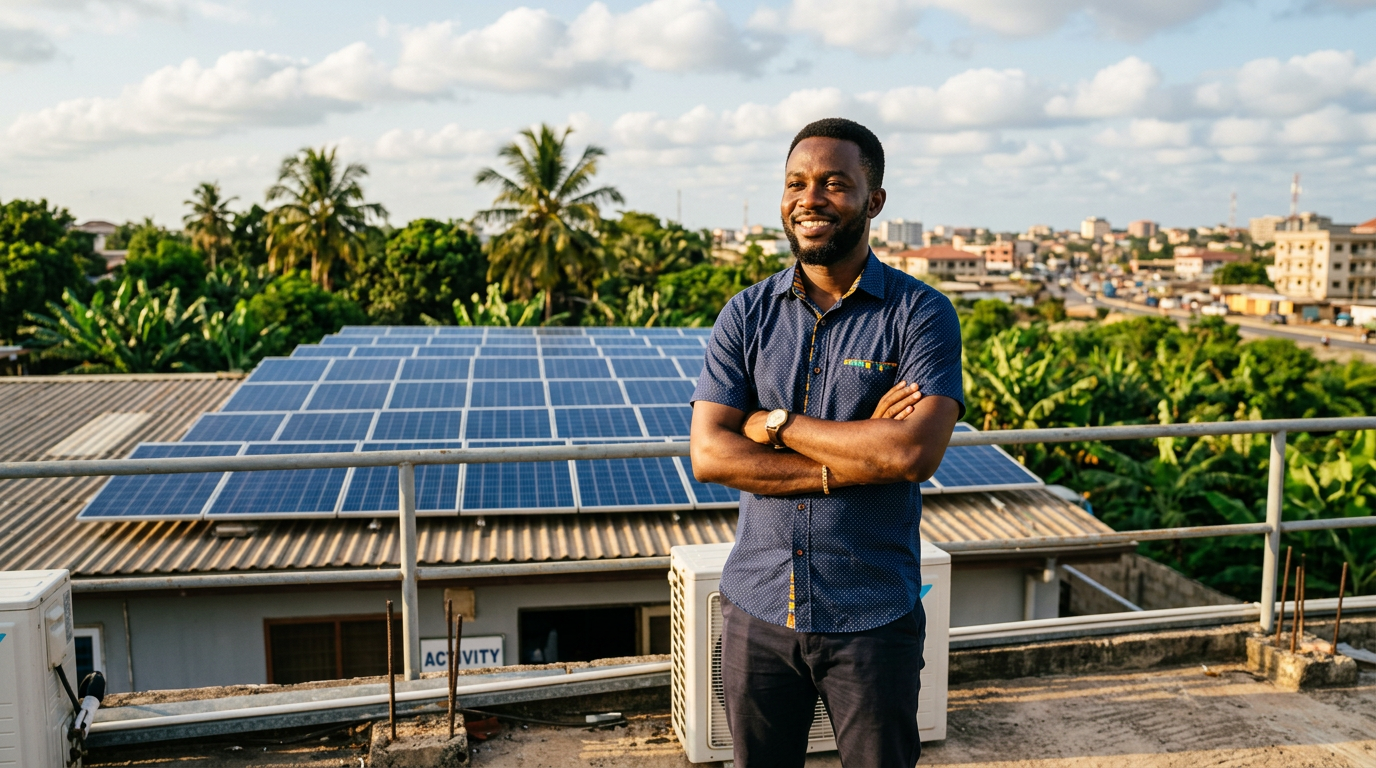
Green finance — funding directed at activities that reduce emissions, improve climate resilience, or use resources more efficiently — is increasingly available to Ghanaian small and medium enterprises. Whether you run a manufacturing workshop, a food-processing unit, a farm, or a retail business, investments in solar power, energy-efficient machinery, clean cooking technologies, or waste management can now attract dedicated financing from commercial banks and development finance channels.
The market is not a single government window. It is a collection of bank products, intermediary programmes, regulatory frameworks, and policy incentives that have been building since Ghana launched its Sustainable Banking Principles in 2019. In 2026, with the Bank of Ghana's Climate-Related Financial Risk Directive now in effect, lenders are paying closer attention to environmental and climate risks — and that creates both new scrutiny and new opportunity for well-prepared SMEs.
Why green finance can make business sense
The business case for green investment goes beyond environmental branding. For energy-intensive SMEs, solar installations and efficient machinery can reduce operating costs and protect against Ghana's persistent electricity supply challenges. Ghanaian banking materials have reported energy-cost reductions among SMEs adopting solar, though every business should calculate its own savings using actual bills, operating hours, and equipment specifications before committing.
Beyond cost savings, a green investment can help your business reduce production interruptions, meet environmental and social standards increasingly required by lenders, and position itself for customers or investors that expect evidence of environmental performance. A 'green' label does not replace normal creditworthiness — banks still need evidence of stable cash flow and repayment capacity — but it can open doors to products and programmes not available to conventional borrowers.
The clearest SME routes to green finance in Ghana
The most accessible green finance options for Ghanaian SMEs in 2026 are products offered directly by commercial banks. Stanbic Bank Ghana has a reported solar and clean-energy financing product that can cover up to 80% of a solar system's cost, with tenors of seven to ten years, subject to the use of accredited engineering, procurement, and construction firms or approved suppliers. Absa Bank Ghana offers a Green Finance Loan covering solar installations and energy-efficient equipment for individuals and SMEs that can demonstrate the environmental benefit of their project and satisfy the bank's normal credit requirements.
Behind some of these bank products sits Development Bank Ghana (DBG), which supports blended financing partnerships with participating financial institutions. DBG does not typically lend directly to SMEs; its support is channelled through partner banks. If your bank is a DBG partner, ask whether a blended or concessional rate is available for your green investment. The SUNREF Ghana programme — historically delivered through partner banks including CalBank and GCB Bank — has also provided loans, technical assistance, and investment grants of up to 10% for eligible renewable-energy and energy-efficiency projects, though you should confirm whether a current 2026 window is open before applying.
What the Bank of Ghana's new rules mean for your loan application
The Bank of Ghana issued its Climate-Related Financial Risk Directive in November 2024, with an effective date of 1 January 2026 for banks. Specialised deposit-taking institutions and non-bank financial institutions have a later alignment deadline of 31 December 2026. These rules require banks to assess and manage climate-related financial risks across their loan portfolios.
For an SME borrower, this translates into more detailed questions from your lender about your business's exposure to flooding, drought, or erratic rainfall; your dependence on high-emission or environmentally sensitive activities; and how a proposed investment reduces energy use, pollution, or climate exposure. Being prepared to answer these questions — and to show that your project reduces rather than increases climate risk — will strengthen your application.
Ghana's Sustainable Banking Principles, in place since 2019, already require banks to apply environmental and social risk management across priority sectors including agriculture, manufacturing, construction, and energy. By March 2025, average compliance with these principles had risen to 73% across the banking sector, up from 42% in 2021 — meaning your lender is increasingly likely to ask about environmental and social factors as a standard part of credit assessment.
Ghana's Green Finance Taxonomy: a tool for your proposal
Ghana launched Phase One of its Green Finance Taxonomy in October 2024. The taxonomy classifies economic activities as green based on their contribution to climate mitigation, climate adaptation, or other environmental objectives. Phase Two, targeted for 2025, was planned to add quantitative thresholds and sector-specific incentives, with Phase Three in 2026 focusing on transition criteria for carbon-intensive sectors.
For an SME, the taxonomy is most useful as a framing tool. If your investment — solar panels, energy-efficient equipment, waste management, climate-smart agriculture, or clean cooking technology — falls within a classified green category, you can use that classification to explain to a lender why your project qualifies as green. Ask your bank whether it uses the taxonomy in its green product eligibility assessment, and whether alignment with a taxonomy category affects your interest rate or access to a grant component.
Preparing a strong green finance application
Regardless of which bank or programme you approach, a well-prepared application will include the same core elements. Start by defining exactly what you intend to purchase or build, and obtain a detailed quotation from a credible or approved supplier. Separate equipment, installation, and maintenance costs. Collect recent bank statements and financial records, and prepare realistic cash-flow projections that show how repayments will be met under conservative assumptions.
You should also be ready to quantify the environmental benefit of your project in plain language — for example, the reduction in monthly electricity bills, the volume of waste diverted from landfill, or the improvement in water use efficiency. Lenders increasingly want to see that a project delivers a measurable environmental outcome, not just a green label.
- Collect electricity bills or other operating-cost data to establish your current baseline.
- Obtain a supplier quotation with full technical specifications and warranty terms.
- Prepare a cash-flow forecast showing the project's effect on costs and repayment capacity.
- Identify any permits, environmental assessments, or certifications relevant to your activity.
- Ask whether the bank requires approved or accredited suppliers for the equipment.
- Confirm whether technical assistance or a grant component is available alongside the loan.
- Request all current terms — interest rate, tenor, fees, and reporting obligations — in writing.
Questions to ask before you apply
The green finance landscape in Ghana includes several programmes and funds whose names suggest broad SME access but whose actual application routes, eligibility rules, and current windows are not always clearly published. Before committing time or money to an application — or to an adviser who claims to facilitate access — confirm the following with the institution directly.
- Is the facility open for applications today, and what is the current window?
- Do SMEs apply directly, or through a participating lender?
- Is the support a loan, a guarantee, a grant, technical assistance, or a combination?
- Is my specific investment eligible under the current product terms?
- Are approved or accredited suppliers mandatory for equipment purchases?
- What financial records, collateral, and security are required?
- How will the environmental benefit of my project be verified?
- Are there fees for assessment, external review, or ongoing monitoring?
Key takeaways
- Commercial banks including Stanbic and Absa now offer dedicated green finance products for SMEs investing in solar, energy-efficient equipment, and other clean technologies.
- The Bank of Ghana's Climate-Related Financial Risk Directive took effect for banks on 1 January 2026 — expect closer lender scrutiny of your business's climate and environmental risks.
- Ghana's Green Finance Taxonomy (Phase One launched October 2024) classifies eligible green activities and can help you frame your investment proposal to a lender.
- A strong green finance application combines an environmentally credible project with solid business fundamentals: verifiable cash flow, repayment capacity, and quality suppliers.
- Always confirm the current application window, eligibility rules, and whether support is a loan, grant, or technical assistance before committing to any programme.
This article is provided for general information only and does not constitute financial advice. Programmes, rates and regulations referenced may change. Please verify details directly with the relevant institutions or authorities before making decisions.