Financing Ghana's 24-Hour Economy: What Every SME Should Know
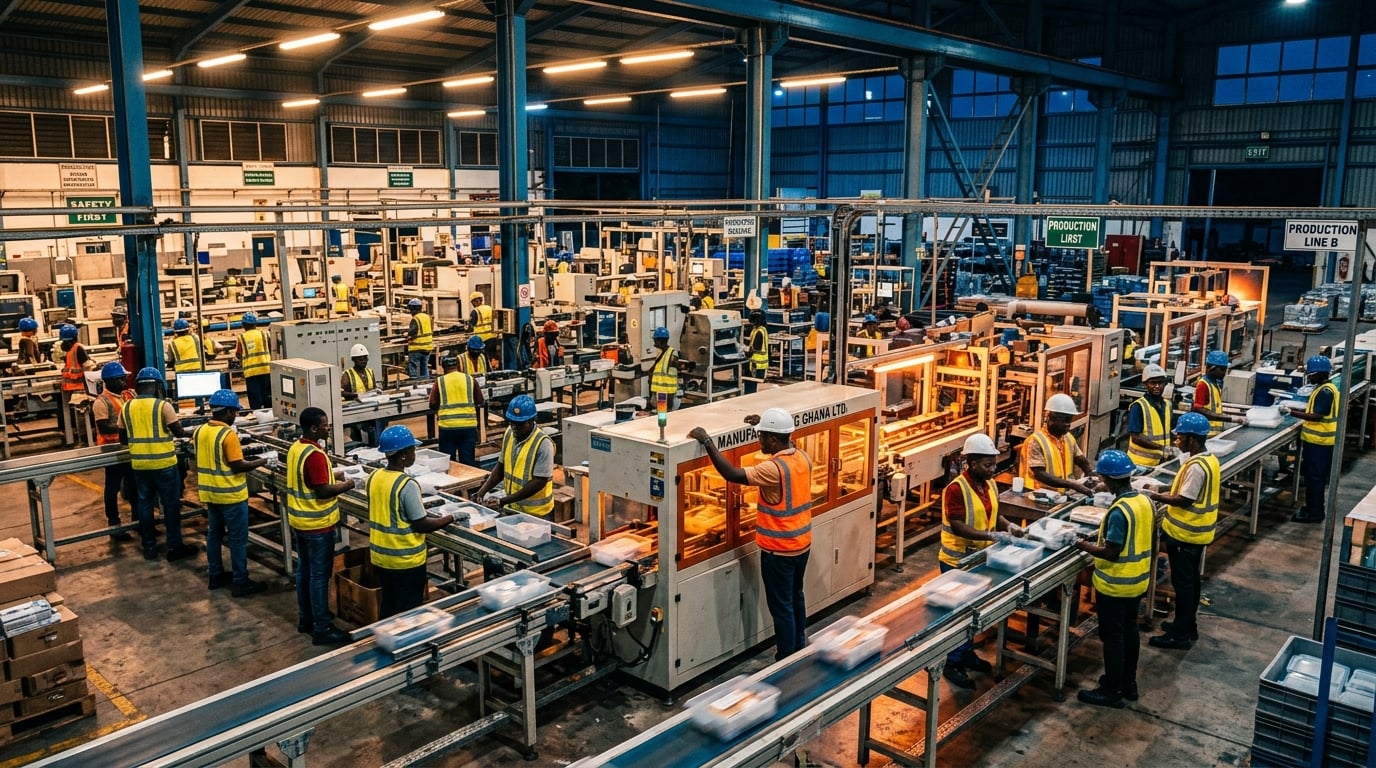
Ghana's 24-Hour Economy programme (branded 24H+) is one of the most talked-about economic reforms of the decade, and for small and medium enterprises it is increasingly a practical funding conversation rather than a political slogan. Following the 24-Hour Economy Authority Bill (2025) — assented to in February 2026 — a central coordinating Authority now exists to make sure financing and infrastructure support actually reaches the businesses it is meant for.
For SME owners, the important shift is that money is being organised around continuous, multi-shift production rather than one-off loans. If your business can credibly commit to running longer or round-the-clock operations, a new set of financing doors is opening.
A dedicated financing vehicle for continuous operations
At the heart of the programme is a specialised financing vehicle created through a memorandum of understanding between the Venture Capital Trust Fund (VCTF) and the 24-Hour Economy Secretariat. Its purpose is to provide what policymakers call 'patient capital' — long-term, risk-tolerant funding aimed squarely at SMEs that commit to continuous, multi-shift production cycles.
This matters because traditional commercial lending has historically left a gap for exactly this kind of business: firms that need longer tenors and more tolerance for risk than a standard one-year facility allows. The 24H+ vehicle is explicitly designed to fill that gap and to align capital with the needs of an entire value chain rather than a single transaction.
Becoming ‘24/7 Ready’
The programme encourages businesses to pursue a '24/7 Ready' certification. Achieving this status is designed to unlock access to specialised financing packages, tax benefits, and expert training. In practice, it signals to financiers and to government that your operation is genuinely structured for extended production.
For an SME, preparing for certification is also good discipline: it forces you to document your production capacity, workforce planning, energy needs, and market demand — the same evidence lenders want to see before approving longer-tenor facilities.
- Map your value chain: agro-processing, pharmaceuticals and manufacturing are among the strategic sectors being prioritised.
- Document realistic multi-shift capacity and the additional working capital it requires.
- Line up the machinery, infrastructure and staffing needed to sustain continuous operations.
Regulatory groundwork with the Bank of Ghana
The 24-Hour Economy Secretariat has engaged the Bank of Ghana to make sure the wider financial ecosystem can support 24/7 operations. Three areas stand out for SMEs. First, collateral frameworks are being reviewed to recognise credit insurance schemes, which could strengthen the ability of smaller firms to secure loans without heavy traditional collateral. Second, regulators are developing specific guidelines for 24-hour loan portfolios. Third, foreign exchange hedging instruments are being explored to help businesses that import inputs manage currency risk and borrow at more reasonable rates.
Infrastructure and the 2026 Budget
The programme is tied to national infrastructure investment. Through the 'Big Push' programme, government is developing industrial parks — such as the Kumasi Machinery & Technology Park and the Akosombo Textiles and Garments Park — where SMEs can access matched financing alongside shared industrial infrastructure.
The 2026 Budget positions SME financing as a core pillar in a broader ambition to create hundreds of thousands of jobs, reinforcing the message that access to finance is being treated as part of an interconnected production system rather than a stand-alone subsidy.
What SMEs should do now
The opportunity is real, but it rewards preparation. Businesses that already have clean records, a credible growth plan, and the operational capacity to run extended shifts will be best placed to access the new facilities. Use this window to get your documentation, financials and value-chain positioning in order.
Key takeaways
- A dedicated VCTF / 24-Hour Economy Secretariat financing vehicle offers long-term, risk-tolerant ‘patient capital’ for multi-shift SMEs.
- '24/7 Ready' certification is the gateway to specialised financing packages, tax benefits and training.
- The Bank of Ghana is reviewing collateral rules, 24-hour loan guidelines and FX hedging to support the programme.
- Industrial parks under the ‘Big Push’ offer matched financing plus shared infrastructure.
- Preparation — clean records, capacity planning and value-chain focus — is the key to qualifying.
This article is provided for general information only and does not constitute financial advice. Programmes, rates and regulations referenced may change. Please verify details directly with the relevant institutions or authorities before making decisions.