Agribusiness Financing in Ghana: A Practical Guide for SME Owners
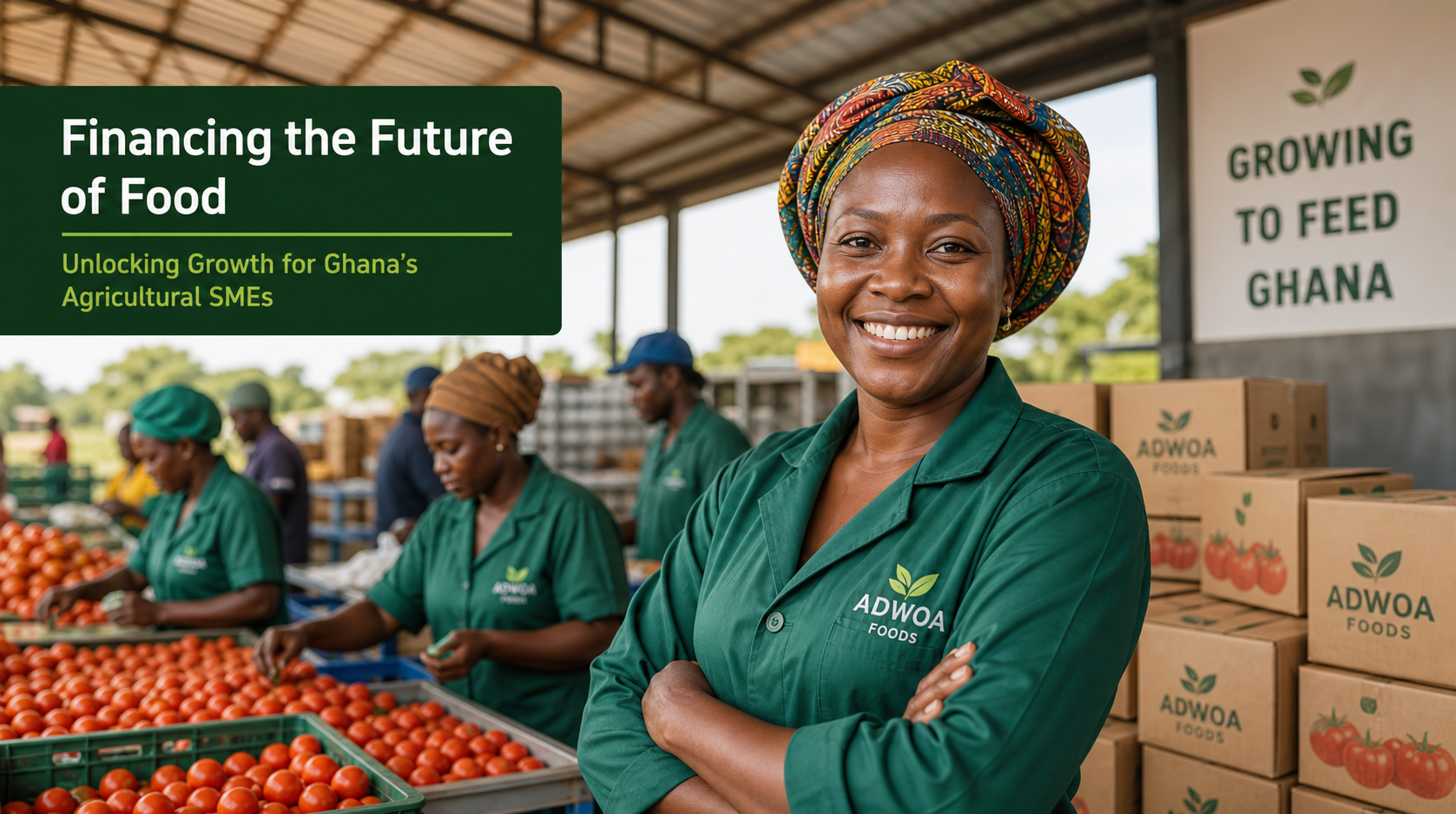
Agriculture remains the backbone of Ghana's economy, employing a large share of the workforce and feeding millions of households. Yet for the smallholder farmer, the food processor, or the agro-input dealer trying to grow, access to affordable credit has long been one of the biggest obstacles. Lenders have historically viewed the sector as high-risk — seasonal cash flows, weather dependence, weak documentation, and collateral shortages all contribute to that perception.
The good news is that the financing landscape for agribusiness SMEs in Ghana has been improving. GIRSAL, ADB Ghana, Ghana EXIM Bank, and a growing number of commercial banks now offer products specifically designed for agricultural value chains. This guide explains how each route works, what you need to qualify, and how to prepare a strong application.
Understanding GIRSAL: Ghana's Agricultural Credit Guarantee Scheme
The Ghana Incentive-Based Risk-Sharing System for Agricultural Lending (GIRSAL) is not a bank — it does not disburse loans directly to farmers or agribusinesses. Instead, it is a non-bank institution that reduces the risk financial institutions face when lending to agriculture by providing credit risk guarantees of up to 70% of qualifying loan principal.
The process works like this: you apply to a participating financial institution (PFI), which conducts its own credit assessment. If your facility qualifies, the PFI seeks GIRSAL risk cover before approving and disbursing the loan. You repay the PFI — not GIRSAL. By April 2026, 40 financial institutions had granted more than GH¢1.81 billion in GIRSAL-guaranteed loans to over 5,600 agribusinesses across all 16 regions of Ghana.
A GIRSAL guarantee does not automatically mean a lower interest rate, no collateral requirement, or protection from enforcement if you default. Ask your lender in writing how the guarantee affects required security, pricing, and approval conditions. Also confirm that your chosen bank or microfinance institution is currently a GIRSAL PFI — participation can change.
- GIRSAL covers up to 70% of qualifying agricultural loan principal through its Credit Risk Guarantee scheme.
- The Bank of Ghana recognises GIRSAL guarantees as eligible collateral for financial institutions, and has extended the Single Obligor Limit for relevant PFIs from 10% to 25% to support agricultural lending.
- GIRSAL's lender training programme has reached a nineteenth cohort, with growing attention to environmental, social and governance (ESG) considerations and forest-positive finance for tree crops.
- More than 60% of historical agricultural loan applications reviewed by GIRSAL contained misrepresentations — honest, complete records are a genuine competitive advantage.
ADB Ghana: Dedicated Agribusiness Finance
Agricultural Development Bank (ADB) Ghana is the country's specialist agricultural lender, with an Agribusiness Division covering primary production — food crops, livestock, aquaculture — as well as agro-marketing, processing, and input distribution. Its loan tenors are structured to match agricultural cycles: short-term facilities of up to 18 months, medium-term from 18 to 36 months, and long-term from 36 to 84 months.
To qualify, you will need a formal proposal demonstrating adequate cash flow for repayment, an active ADB account, evidence of managerial ability, an environmentally acceptable project, and suitable security — which may include landed property, blocked cash, personal or group guarantees, stocks, or bonds. Assessment typically involves a discussion with a credit officer, site verification, and preparation of a credit report.
No verified current interest rate for ADB agribusiness loans is available at the time of writing — published historical figures are outdated and should not be used for planning. Request a written quotation from your nearest ADB branch showing the current interest basis, all fees, insurance requirements, repayment dates, and total amount repayable.
Ghana EXIM Bank: For Agro-Processors and Exporters
If your agribusiness has an export dimension — whether you are processing cocoa, packaging shea butter, milling rice for regional markets, or supplying fresh produce to international buyers — Ghana Export-Import Bank (GEXIM) is worth exploring. GEXIM is a government-owned policy and development finance institution established under Act 911 of 2016, and it does not accept deposits.
Relevant GEXIM facilities include pre-shipment credit for raw materials and export-production inputs, post-shipment credit to bridge the gap between production expenditure and export receipts, medium- to long-term export-development finance for farms and plantations, agro-processing credit, and credit guarantees. GEXIM's agricultural scope extends to processing, packaging, storage, distribution, and export — not just primary production.
Published eligibility guidance generally requires a Ghana-registered company with at least 30% Ghanaian ownership and a verifiable export order or contract. GEXIM announced a strategic reset for 2025–2030 with a focus on agro-processing, rice, poultry, and export capacity. Confirm current sector priorities, funding windows, and documentation requirements directly with GEXIM before preparing your application.
Commercial Banks, Rural Banks, and Digital Options
Several commercial banks offer SME products that agribusinesses can access. Absa Ghana has published an SME special offer describing a 10% annual rate for eligible women-owned SMEs, agribusinesses, youth-owned businesses, and fintechs — subject to registration, an active Absa business account, banking history, training, and satisfactory credit checks. Fidelity Bank's BRIDGE-in-Agriculture programme targets women and young people aged 18–35 in agricultural value chains, while its eco.business Fund partnership supports agribusinesses with sustainability credentials. Always request a written quotation confirming current rates and total cost.
Warehouse receipt finance is another option for commodity producers: ARB Apex Bank and the Ghana Commodity Exchange have supported financing arrangements in which commodities held in certified warehouses serve as loan security. This can be particularly useful for maize, soybean, and other storable crops. Confirm participating rural or community banks, eligible commodities, warehouse charges, and current availability.
Digital credit — through apps and mobile money platforms — can help bridge a short, defined liquidity gap, but it is generally not suitable for seasonal production cycles or long-term investment. Before accepting any digital offer, verify the provider's regulatory status on the Bank of Ghana's list of approved digital lending applications, and read the full disclosure, not just the amount sent to your wallet.
How to Prepare a Strong Application
The single most important thing you can do before approaching any lender is to build a truthful, complete evidence file. This means registration documents, identification, ownership information, bank and mobile-money statements, sales records, invoices, existing debt schedules, and any lease or land-use evidence. Disclose all debts and problems — hidden liabilities can undermine an otherwise strong application, and GIRSAL's own data shows that misrepresentation is the leading reason agricultural loan applications fail.
Pair your evidence file with a realistic cash-flow forecast that aligns repayment dates with your production, harvesting, processing, and buyer-payment cycles — not just the date of disbursement. For export-oriented businesses, attach purchase orders, supply agreements, or verifiable export contracts. Then approach at least two lenders and request comparable written quotations covering the interest basis, all fees, compulsory insurance, collateral valuation and registration costs, repayment dates, grace period, default charges, and total amount repayable.
- Define the exact financing gap: separate working capital, equipment, expansion, and emergency cash needs.
- Match the route to the business: GIRSAL through a PFI for agricultural value-chain credit; ADB for agriculture and related services; GEXIM for export or agro-processing; MASLOC for qualifying smaller or group-based needs.
- Protect collateral and guarantors: understand enforcement consequences before offering an essential family or business asset.
- Refuse informal fees: do not pay agents or facilitators unofficial charges — use official channels and obtain receipts for every authorised payment.
- Confirm programme availability: a press release or product page is not an approval, and funding windows can close. Verify directly with the institution before committing expenditure.
Key takeaways
- GIRSAL does not lend directly — apply through a participating financial institution (PFI) that can seek GIRSAL risk cover of up to 70% of qualifying loan principal.
- By April 2026, 40 financial institutions had granted more than GH¢1.81 billion in GIRSAL-guaranteed loans to over 5,600 agribusinesses across Ghana.
- ADB Ghana offers short-, medium- and long-term agribusiness finance for production, livestock, aquaculture, processing and input distribution — but requires a viable proposal, an ADB account and suitable security.
- Ghana EXIM Bank supports agro-processors and exporters with pre- and post-shipment credit, export-development finance and guarantees — a verifiable export order or contract strengthens any application.
- Honest, complete financial records are a competitive advantage: GIRSAL has reported that more than 60% of historical agricultural loan applications contained misrepresentations.
This article is provided for general information only and does not constitute financial advice. Programmes, rates and regulations referenced may change. Please verify details directly with the relevant institutions or authorities before making decisions.