Accessing Development Finance for Your Ghanaian SME: A Practical 2026 Guide
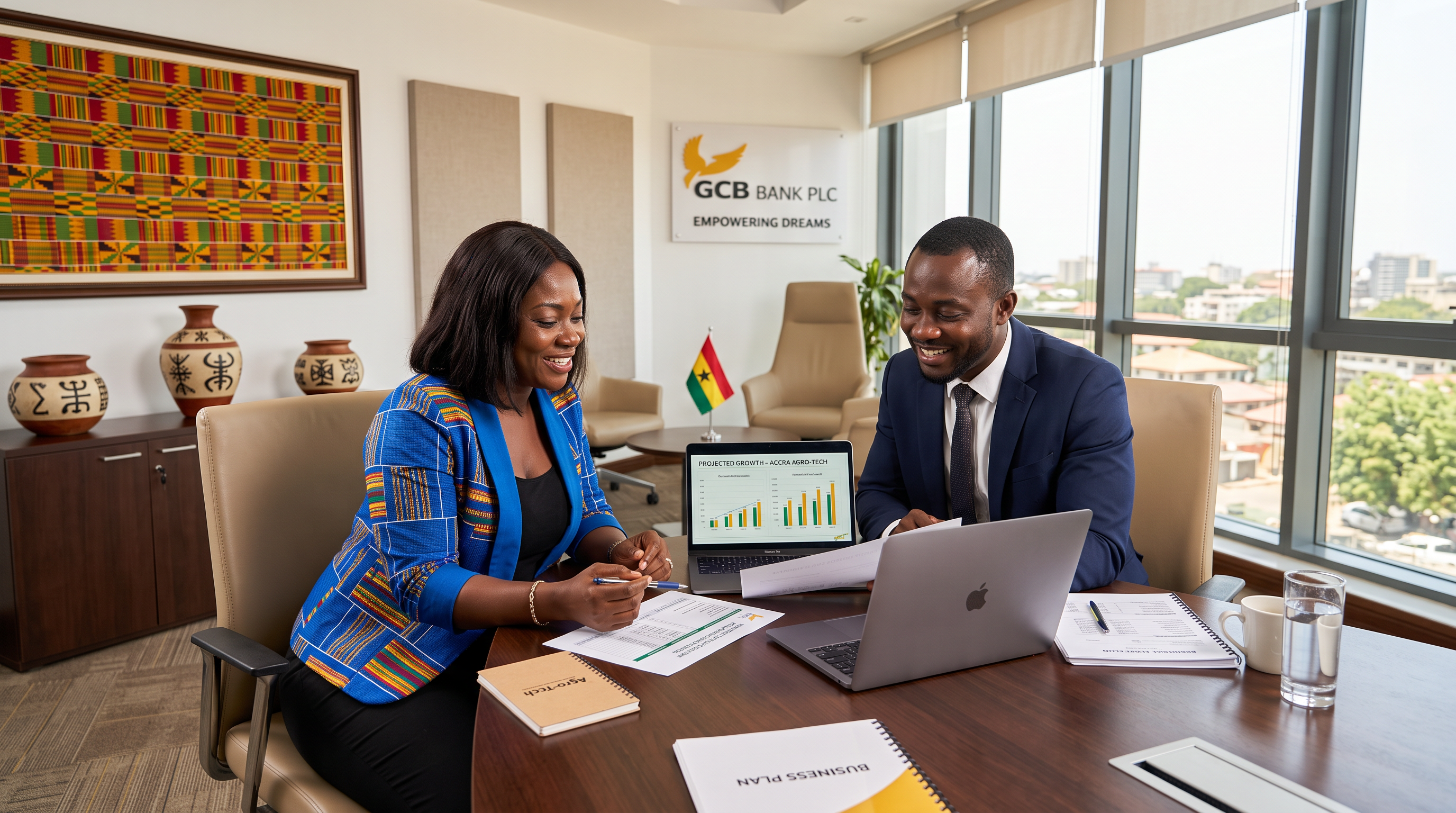
Development finance is one of the most misunderstood sources of business funding in Ghana. Many SME owners have heard of the Development Bank Ghana, Ghana EXIM Bank or international institutions such as the IFC and KfW — but are unsure how to access them, or whether they can access them at all. The answer depends on understanding how development finance actually flows.
For most Ghanaian SMEs, the practical route is not a direct application to an international development finance institution. It is through a Ghanaian commercial bank, Rural and Community Bank, savings and loans company or specialised programme that receives funding or risk support from a development finance institution. The most important question is therefore not simply 'Which DFI has money?' It is: 'Which Ghanaian lender or programme is currently using DFI-backed funding for a business like mine?'
What development finance is — and what it is not
Development finance uses loans, guarantees, equity, grants and technical assistance to support economic and social objectives that ordinary commercial finance may not adequately serve. In Ghana, common objectives include expanding medium- and long-term finance for SMEs, supporting agribusiness, manufacturing, ICT and tourism, financing exporters and value-added production, and improving access for women-owned businesses and rural enterprises.
Development finance is not automatically a grant or a cheap loan. A development finance institution (DFI) may provide wholesale funding to a bank, guarantee part of a loan portfolio, invest in a fund or support a lender's systems. The Ghanaian bank or fund may still conduct a full commercial credit assessment — and may still decline an application that does not meet its criteria.
Development Bank Ghana: apply through a PFI, not DBG
Development Bank Ghana (DBG) is a wholesale development finance institution. It does not provide ordinary retail loans directly to SMEs. Instead, DBG channels longer-term funding and partial credit guarantees through accredited Participating Financial Institutions (PFIs) — commercial banks, Rural and Community Banks, savings and loans companies and other eligible intermediaries.
DBG's focus areas include agribusiness, manufacturing, ICT and tourism. By mid-2026, DBG had cumulatively disbursed approximately GH₵2.5 billion to nearly 1,000 businesses through its PFI network — a figure that illustrates the scale of the model, not the amount available to any individual applicant. KfW supports DBG through a €46.5 million subordinated loan and a €3 million capacity-building grant.
The practical route to DBG-backed finance is straightforward: identify a current DBG PFI, contact its SME or business-banking team, confirm whether it is currently originating DBG-supported loans in your sector, and apply through that institution. The PFI — not DBG — makes the final lending decision and sets the borrower-facing interest rate, fees, security requirements and repayment schedule.
- Ask the PFI: 'Is this facility currently open, and is my sector eligible?'
- Be prepared for environmental and social screening — DBG-linked lending requires assessment of environmental, labour and community risks.
- Do not assume that every facility from a DBG partner automatically uses DBG funding or carries preferential terms.
Ghana EXIM Bank: for exporters and value-added producers
Ghana Export-Import Bank is the state institution focused on export-led development. Its support is most relevant to exporters, businesses supplying export value chains, manufacturers and enterprises adding value to Ghanaian products. Reported forms of support include credit facilities for exporters, export-related guarantees, bid security and performance bonds, and advance-payment guarantees.
Ghana EXIM has also operated the SME Growth and Opportunity initiative, combining finance with technology, innovation and knowledge support, and its SME Clinic focuses on export readiness and financial literacy. Its 2025–2030 strategy indicates an intention to expand instruments such as invoice discounting, factoring and warehouse-receipt financing while reducing collateral constraints.
Some reports associate Ghana EXIM SME finance with a 9% annual interest rate — but applicants should obtain current written confirmation of the applicable rate, fees, security and programme conditions directly from the bank. Ghana EXIM's loan portfolio grew from US$68 million in 2016 to US$278 million by the fourth quarter of 2025, though the bank has also reported significant portfolio-quality challenges that mean credit appraisal and enforcement should be expected.
How international DFIs reach Ghanaian SMEs
International development finance institutions — including IFC, AfDB, KfW, FMO and Proparco — typically reach Ghanaian SMEs through local banks, risk-sharing arrangements and investment funds rather than direct application windows. Understanding which local institution carries a DFI-backed facility is the key to accessing this funding.
IFC's September 2024 arrangement with Access Bank Ghana created a US$10 million local-currency-equivalent risk-sharing facility providing a 50% guarantee on a portfolio of SME loans, with a focus on women-owned SMEs. FMO's US$10 million equity investment in digital lender Fido supports lending to small businesses without formal financial track records. Proparco's Impact+ Facility, launched in November 2025 with EU backing, aims to mobilise €1.1 billion in guarantees over five years across Africa, with risk coverage of up to 80% of loan principal through participating banks.
- IFC: ask Access Bank, Ecobank or another relevant partner bank whether a current IFC-supported portfolio applies to your application.
- KfW: the clearest route is through DBG and its PFIs.
- FMO: approach FMO-backed lenders such as Fido, or investment funds in the CiGaba structure for growth capital.
- Proparco: ask participating banks whether an active Proparco guarantee applies to your proposed facility.
- AfDB: for trade finance, ask your transaction bank whether an AfDB-backed guarantee or confirming-bank structure is available.
A practical application playbook
Regardless of which development finance route you pursue, the same preparation principles apply. Match the route to the use of funds — working capital, equipment, export orders, trade guarantees and growth equity are served by different channels. Confirm with the delivery institution that the facility is currently open, that your sector and purpose are eligible, and that DFI support actually applies to your specific application.
Prepare an evidence file: business and ownership records, financial statements, existing borrowing information and evidence of sales and payment behaviour. Where formal records are limited, ask whether the lender considers mobile-money histories, point-of-sale data or supplier-payment records. For DBG-linked finance, prepare information on environmental and social risks connected to the proposed investment.
- Present a clear cash-flow repayment case: explain how the money will be used, how it will generate revenue, and how repayments fit your operating cycle.
- Clarify total cost before accepting: request written details of the interest rate, fees, security requirements and repayment schedule.
- Use funds for the approved purpose and maintain records — development-finance loans are enforceable obligations.
- Inform the lender early if cash flow deteriorates; do not wait until repayments are missed.
Choosing the right starting point
The table below summarises the most relevant starting point for common SME financing needs. In every case, the first step is to verify with the delivery institution that the facility is currently open and that your business qualifies.
- Medium- or longer-term productive investment → a current DBG Participating Financial Institution.
- Exporting or producing value-added Ghanaian goods → Ghana EXIM Bank (confirm active products and current terms).
- Rural trading, farming or processing → your local Rural and Community Bank.
- Women-owned or women-led SME → Access Bank, Ecobank or another bank with an active DFI-supported women's portfolio.
- Import or export transaction → your transaction bank's trade-finance desk (ask about AfDB or other backing).
- Former 'EDAIF' support → Ghana EXIM Bank (EDAIF was consolidated into Ghana EXIM in 2016).
Key takeaways
- Development Bank Ghana (DBG) does not lend directly to SMEs — apply through an accredited Participating Financial Institution (PFI) such as a commercial bank.
- Ghana EXIM Bank supports exporters, value-added manufacturers and agro-processors; confirm current products and rates directly with the bank before applying.
- International DFIs such as IFC, KfW, FMO and Proparco reach Ghanaian SMEs through local banks and funds — ask your bank whether a DFI-backed facility applies to your loan.
- EDAIF no longer exists as a separate institution; businesses seeking former EDAIF support should approach Ghana EXIM Bank.
- Prepare a clear cash-flow repayment case, organise your financial records, and verify current terms with the institution that will make the final lending decision.
This article is provided for general information only and does not constitute financial advice. Programmes, rates and regulations referenced may change. Please verify details directly with the relevant institutions or authorities before making decisions.